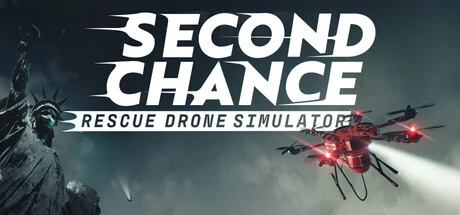
Rescue Drone Simulator: Second Chance: The Drone Sim Built Around Rescuers Who Lost Their Careers
Most drone sims sell precision. This one sells a second chance: Anraga Studios on The Farm 51's story-driven rescue simulator.
Drone simulators usually sell precision: realistic physics, accurate controls, a satisfying landing. Rescue Drone Simulator: Second Chance sells something less common in the genre, a story about the people holding the controller. Its crisis-response unit is built from rescuers whose careers ended, and the drone is how they get back to work.
The game is developed by The Farm 51, the Gliwice studio behind Chernobylite, and published by Warsaw-based Anraga Studios. That pairing is itself part of the story. A drone sim with a character-driven campaign, from a studio known for atmospheric survival games, is the kind of hybrid identity that can help a simulation title reach players beyond its usual niche.
We spoke with Piotr Siemaszko, Publishing Producer at Anraga Studios, about who does what between the two companies, where the “Second Chance” concept came from, and how the game’s two control modes and workshop shape the flight.
Developer: The Farm 51
Publisher: Anraga Studios
Location: Poland (The Farm 51 in Gliwice; Anraga Studios in Warsaw)
Release: Q1 2027 (Steam)
Price: Not yet announced
Platforms: PC (Windows 11, Steam); gamepad and keyboard and mouse
What Is Rescue Drone Simulator: Second Chance?
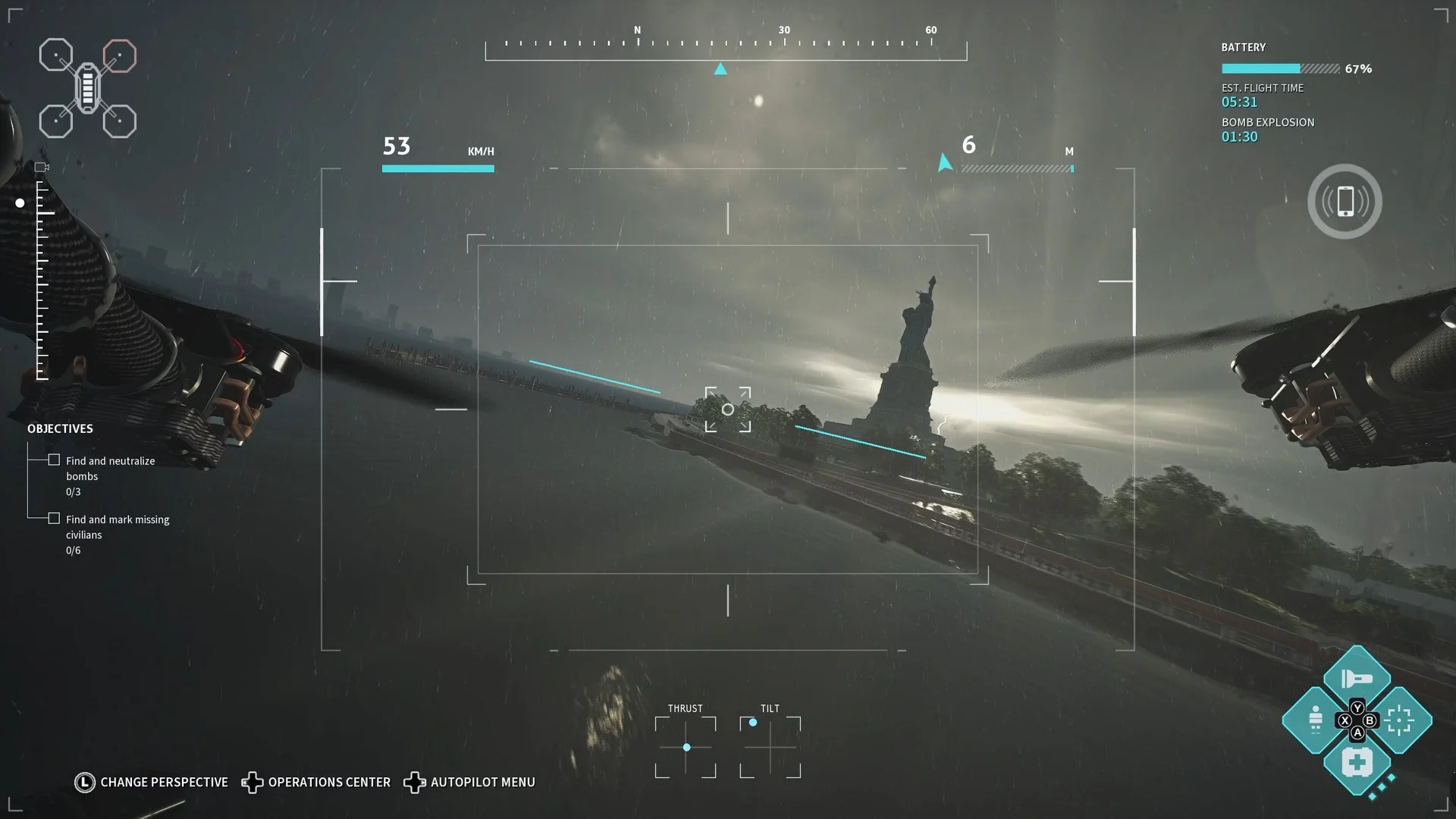
According to its Steam page, players join “a newly formed crisis response unit built out of people whose careers fell apart.” Missions send drones into places too hot, too tight or too unstable for a person: burning buildings, frozen landmarks and collapsing tunnels. The campaign begins with natural disasters and, as it goes on, increasingly turns to crises that are “somebody’s decision.”
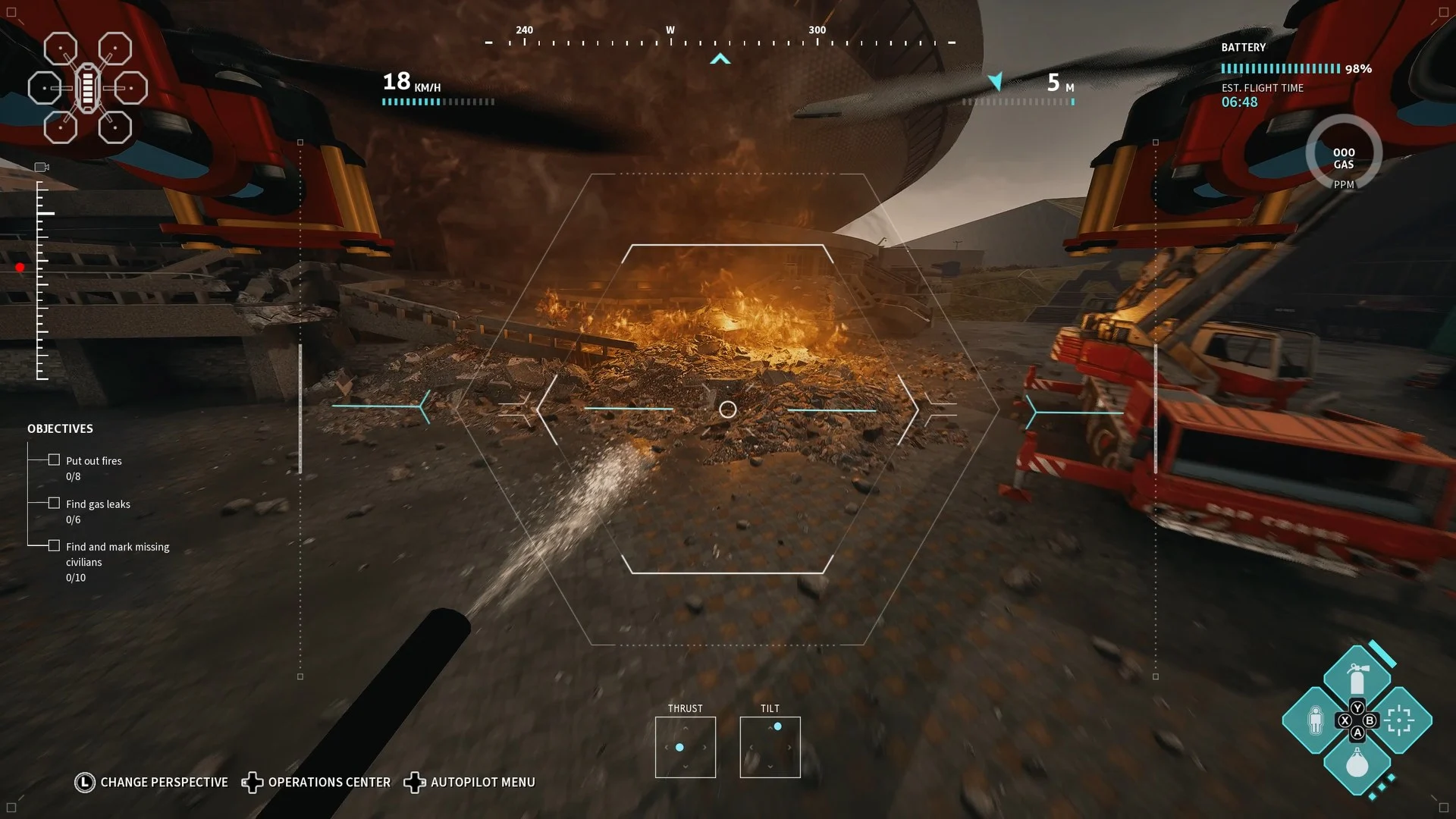
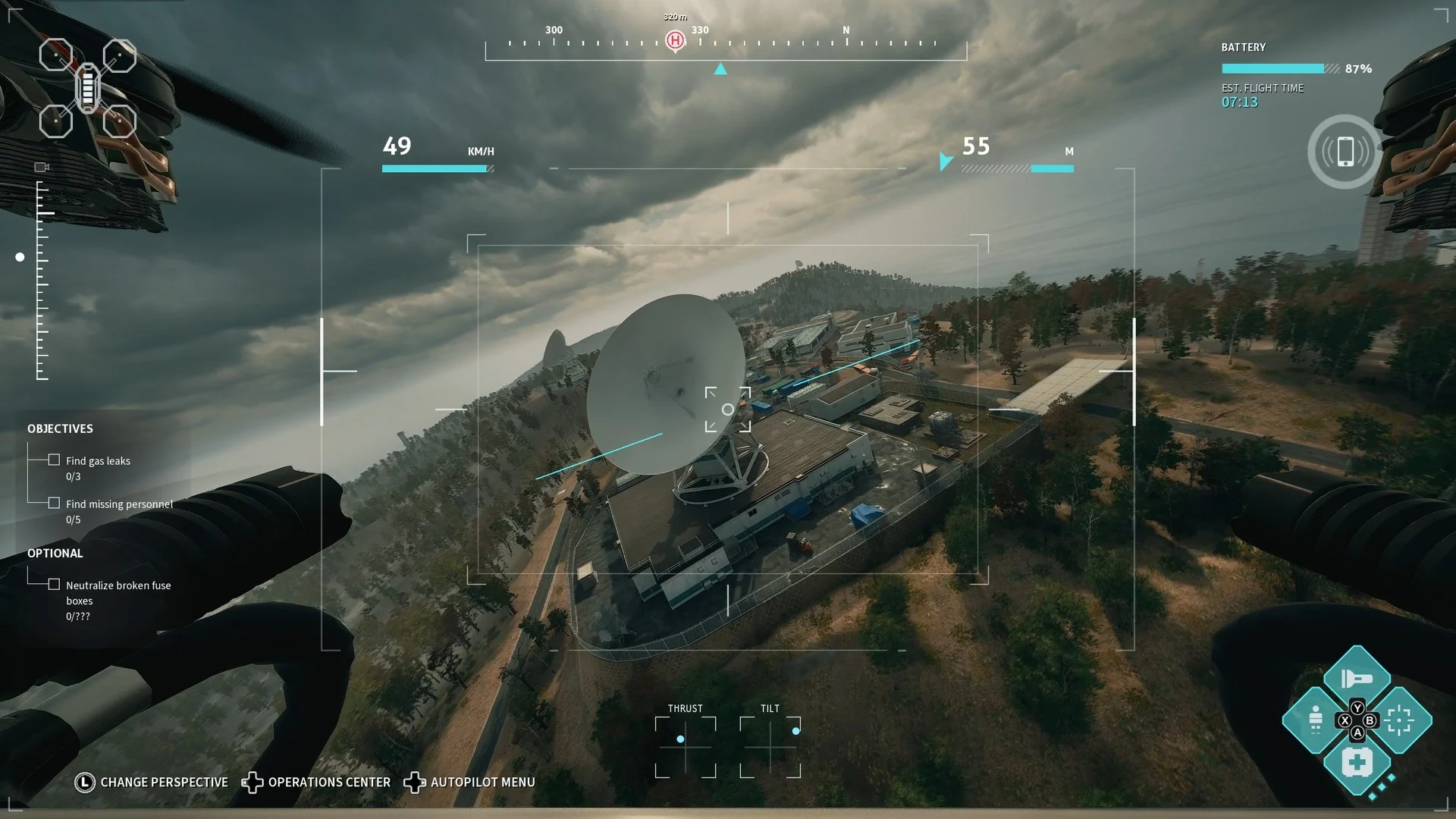
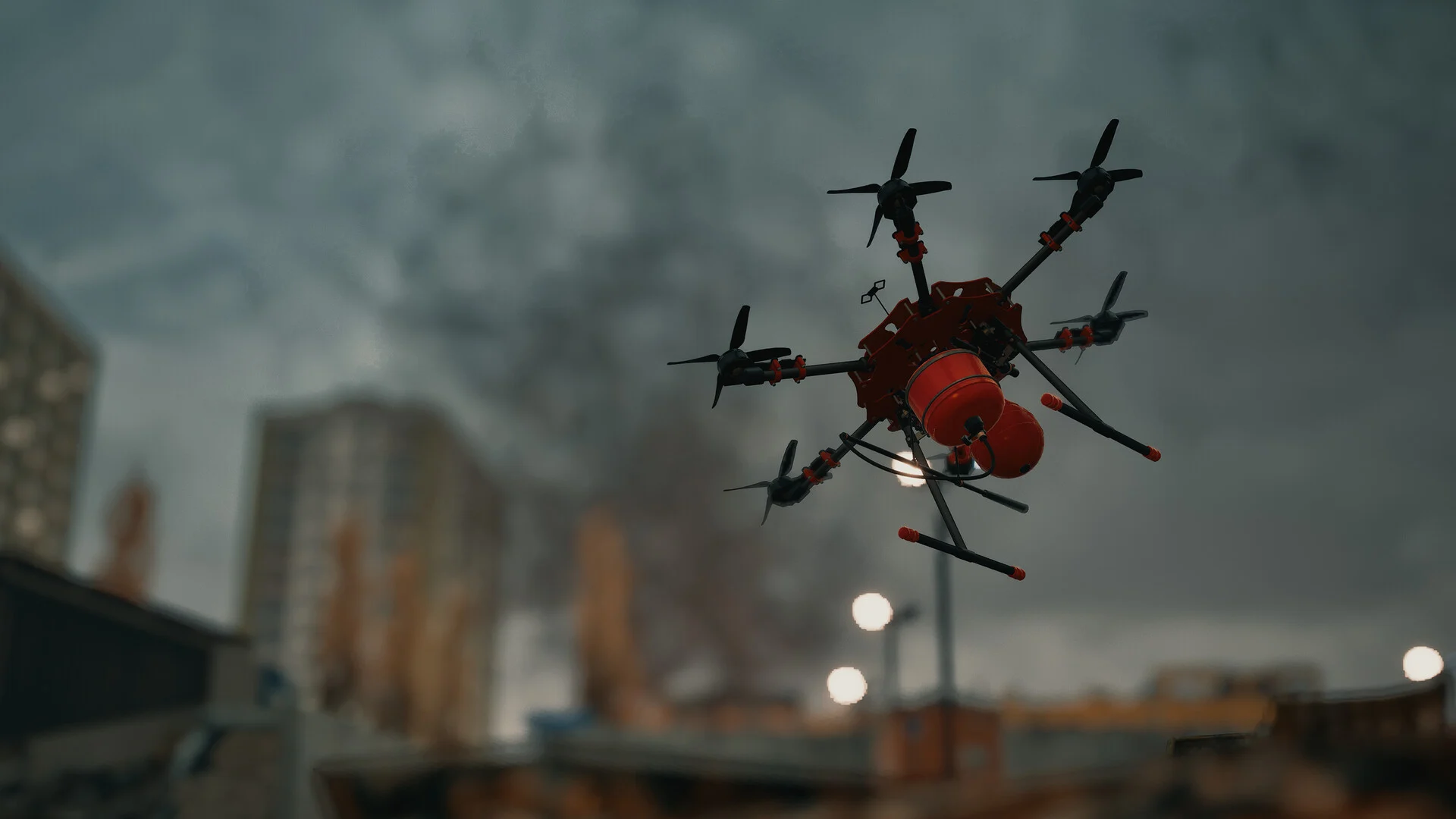
Steam lists four drone types, each with its own equipment. The Rescue drone tracks phone signals to find the missing and drops med kits; the Firefighting drone knocks flames down to clear a path; the Police drone breaks up crowds and takes down hostiles; the Anti-Drone catches enemy machines mid-air with a net launcher. Every mission starts in a workshop, where engines, blades, batteries, arms and cooling all change speed, thrust and flight time.
The store page lists:
- Campaign: a story-driven campaign with 20 missions across 5 maps.
- Fleet: four drone types, each with its own equipment.
- Workshop: swappable components with an immediate effect on flight.
- Controls: Arcade and Simulator modes, first- and third-person views.
- Extras: a free-play mode and full gamepad and keyboard and mouse support.
The four members of the crew each carry their own thread: a firefighter who has not accepted she is never going back in, a paramedic who remembers everyone he did not reach in time, an investigator who distrusts the technology but trusts the work, and a specialist who knows she was wronged and cannot prove it.
The Interview
Iron Bridge Games: Who leads day-to-day development between Anraga and The Farm 51?
Piotr Siemaszko (Anraga Studios): The Farm 51 builds the game, and on the publishing side I’m the one working with them day to day. I’m Piotr Siemaszko, Publishing Producer at Anraga Studios, so I’m the link between our teams on planning, feedback, marketing and release. The creative direction sits with the people making the game at The Farm 51, and my job is to help them get it in front of players.
Iron Bridge Games: Why build the story around rescuers whose careers ended?
Piotr Siemaszko (Anraga Studios): The Second Chance concept came from our CEO, Radosław Kalisz. We wanted to tell a story about people who, for various reasons, could no longer work as rescuers but had never lost their sense of calling. When helping others is such a fundamental part of who you are, the end of a career means more than losing a job. It can mean losing your sense of purpose, your community, and the feeling that you still have a place in the world.
Modern technology gives our characters a way back. Their experience, knowledge and determination are still there; what changes is their ability to put them into practice. That was the aspect of technological progress we wanted to explore: how it can restore people’s independence and enable those who have been excluded to take an active role again. Choosing rescuers makes that idea particularly meaningful.
Artur Fojcik, Game Director at The Farm 51, built the story around that concept. He turned it into a team of characters who each lost something important and are each looking for a new role. Every person they save is also a second chance for them, and that’s where the game takes its title.
Iron Bridge Games: Did you work with any real Polish rescue or fire services?
Piotr Siemaszko (Anraga Studios): Not at the moment, but we’d love to. Rescue and emergency services are exactly the people who could tell us what we got right and what we didn’t, so we hope to partner with them in the future.
Iron Bridge Games: How do Simulator and Arcade modes differ, and how much does the workshop change flight?
Piotr Siemaszko (Anraga Studios): Simulator is much closer to flying a real drone, especially in how the controls are set up. It’s aimed at people who already fly drones, or who want to learn properly. Arcade is for more casual players: say, anyone who has flown drones in games like Watch Dogs or Call of Duty and just wants to jump in.
The workshop matters in both modes. Motors, propellers, batteries, arms, wiring and cooling all affect speed, thrust, flight time and durability. What you build before a mission changes how the drone behaves during it, and wind, damage and payload weight add to that.
Iron Bridge Games: What does “not everyone on the frequency is on your side” hint at?
Piotr Siemaszko (Anraga Studios): It points to the story’s main antagonist, who has an agenda of their own. This is someone who sees the chaos around the team as an opportunity and will use the situation for personal gain. We don’t want to say more than that, but you’ll hear that voice in the trailer.
Iron Bridge Games: Will there be a demo before the Q1 2027 launch?
Piotr Siemaszko (Anraga Studios): We do plan to release a demo. Most likely it will arrive closer to the game’s launch in Q1 2027, and we’ll announce it when the date is set. The best way not to miss it is to wishlist the game on Steam.
Why This Matters in 2026
The relationship between the two companies is unusually well documented, because The Farm 51 Group is listed on the Warsaw Stock Exchange and reports its contracts publicly. In a March 17, 2026 filing, The Farm 51 said it had signed an agreement with Anraga Studios, which it identifies as the publisher, to produce and deliver version 1.0 of a game under the working title “RDS.” The filing sets a production budget of up to PLN 2,000,000 gross, paid out by milestone, and gives The Farm 51 a share of net revenue after the publisher recoups its costs: 25% up to PLN 5,000,000 of cumulative post-recoup revenue, and 50% above that.
On October 12, 2026, The Farm 51 reported a second, separate contract with Anraga Studios to design and deliver expansion content for the same “RDS” project, worth PLN 215,000 net, with work scheduled to finish by December 31, 2026. The filings use only the working title, but “RDS” is Rescue Drone Simulator: the team uses the same shorthand publicly, titling its first Steam devlog “RDS: Second Chance”, and the game’s Steam page lists the same developer and publisher.
That matters because it clarifies the split Siemaszko describes. Anraga funds and publishes; The Farm 51 builds the game and holds creative direction. The filings also describe The Farm 51 as being in restructuring, and its management frames the RDS contract as a step toward stabilising and rebuilding its operations. For readers following the Polish industry, this is a case study in how an established mid-size studio can take on a funded work-for-hire project with a revenue share attached.
For players, the more immediate point is the two-audience design. Simulator mode targets people who fly real drones or want to learn, while Arcade mode is pitched at anyone whose drone experience comes from action games. The workshop applies to both, so the build decisions carry weight regardless of the control scheme. The game has not been developed with real rescue services yet, a point the publisher states openly, though it says it hopes to partner with them.
The Steam page lists a Q1 2027 release. A demo is planned closer to launch, with a date still to be announced.