The Last Opening: The Serbian Survival Game Where You Play Chess Against Death for 40 Nights
Death answers every move. VI Game Forge's Ivan Ristić on a real chess engine with a temper, a game slow by design, and an EP between two albums.
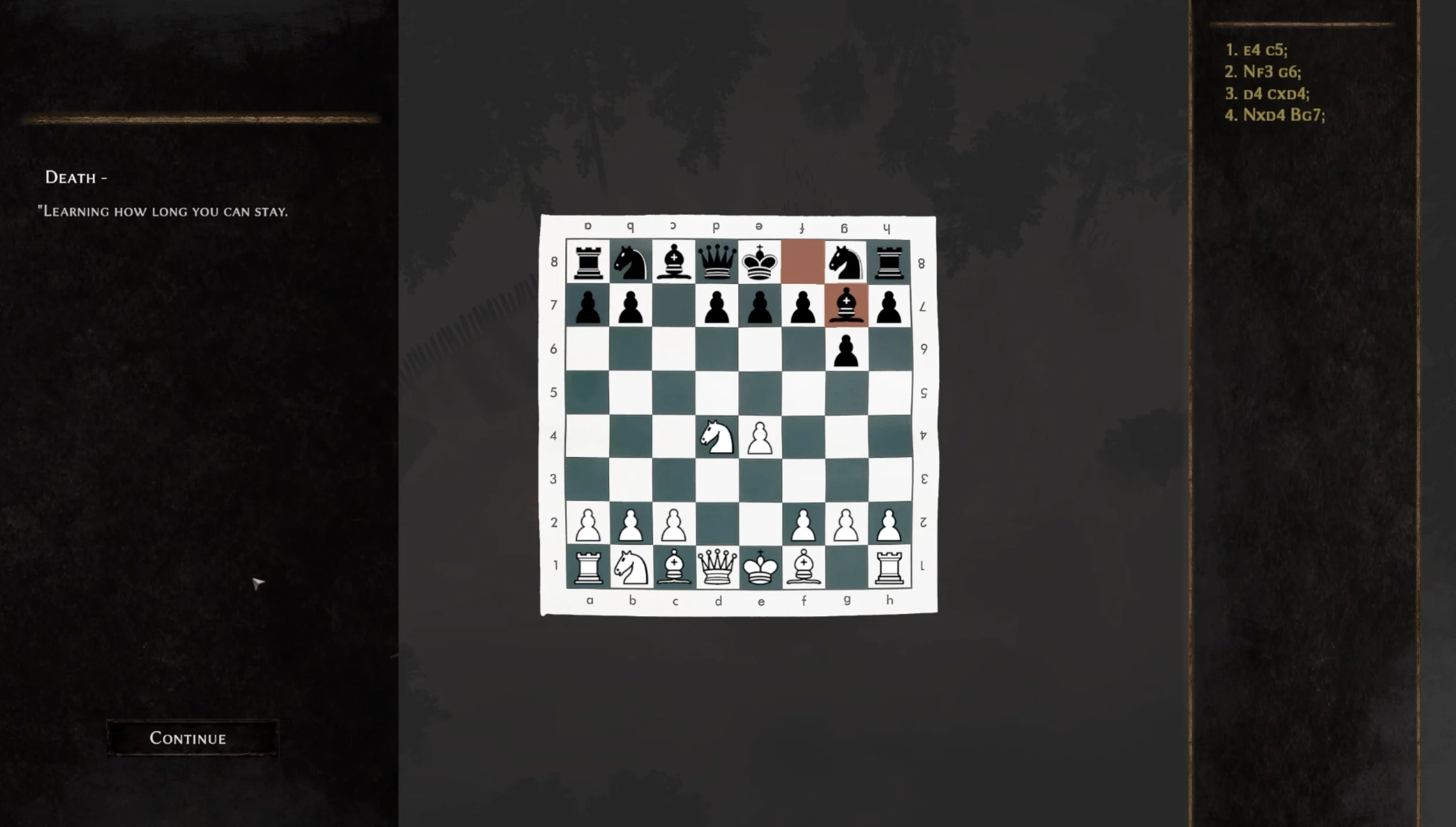
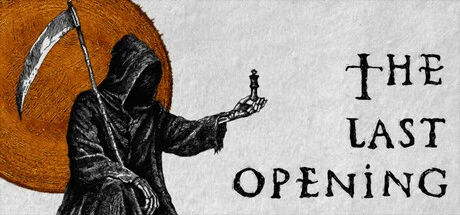
Death came for you. You challenged him to chess. He accepted. That is the premise The Last Opening puts on its Steam page, and it explains the whole game in three sentences: forty nights in a frozen forest, one chess move against Death each night, and a match whose result decides whether the player returns to life.
The game comes from VI Game Forge, the small Serbian studio of Ivan and Valentina Ristić, best known for Svarog’s Dream, an open-world CRPG inspired by Slavic mythology that launched on Steam on December 4, 2023. The Last Opening arrives on the same date three years later. It is, by the developer’s own description, a very different kind of project: smaller, slower, and built from ideas that did not fit the studio’s first game.
What makes it worth a closer look is that the chess is not decorative. The board and the survival layer feed into each other, and the opponent across the table is a real chess engine dressed as a character. We asked lead developer Ivan Ristić how it works.
Developer: VI Game Forge (Ivan and Valentina Ristić)
Location: Serbia
Release: December 4, 2026 on Steam; free demo available now, covering the first five days
Price: Not yet listed
Platforms: PC (Windows), Steam
What Is The Last Opening?
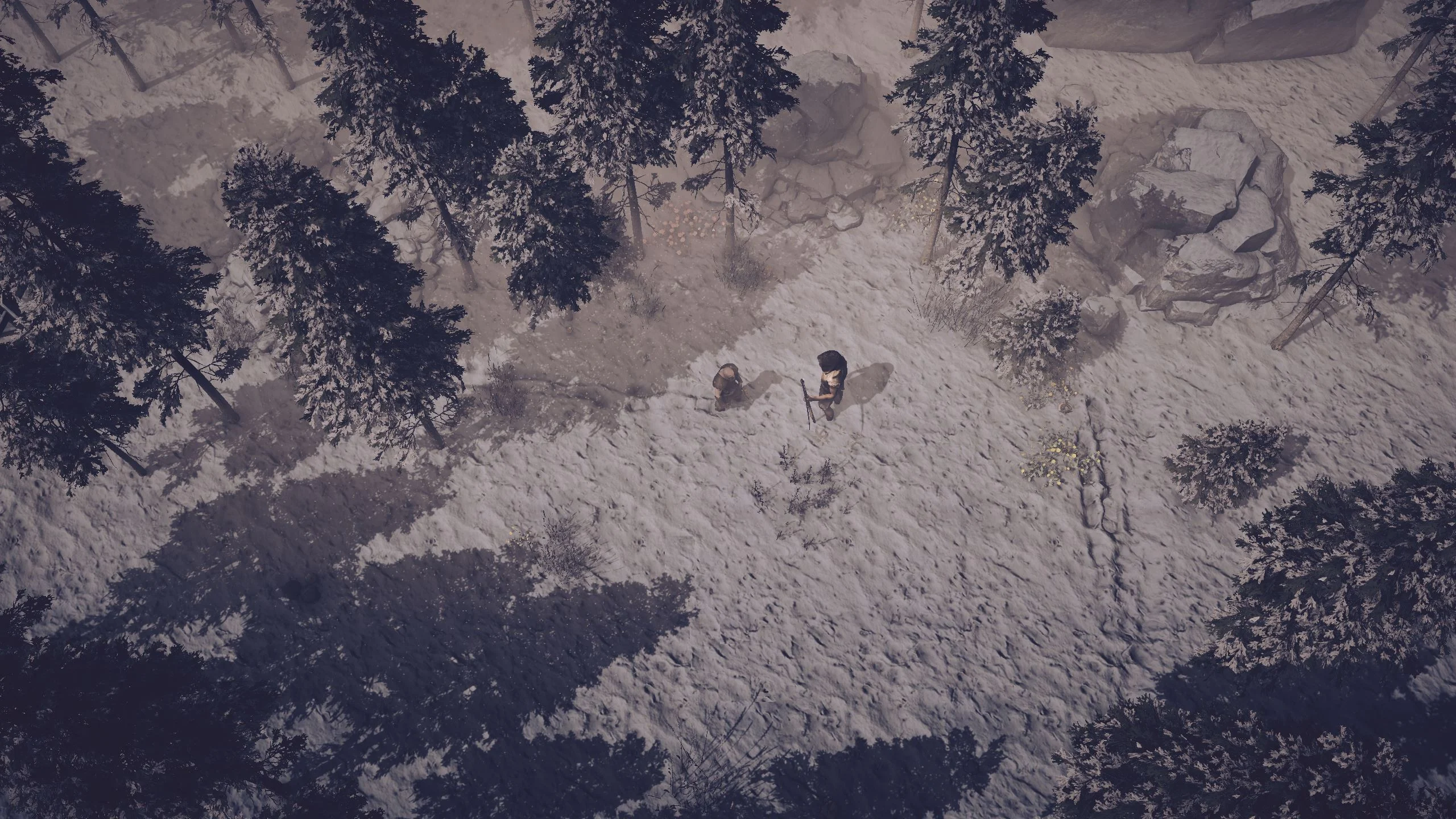
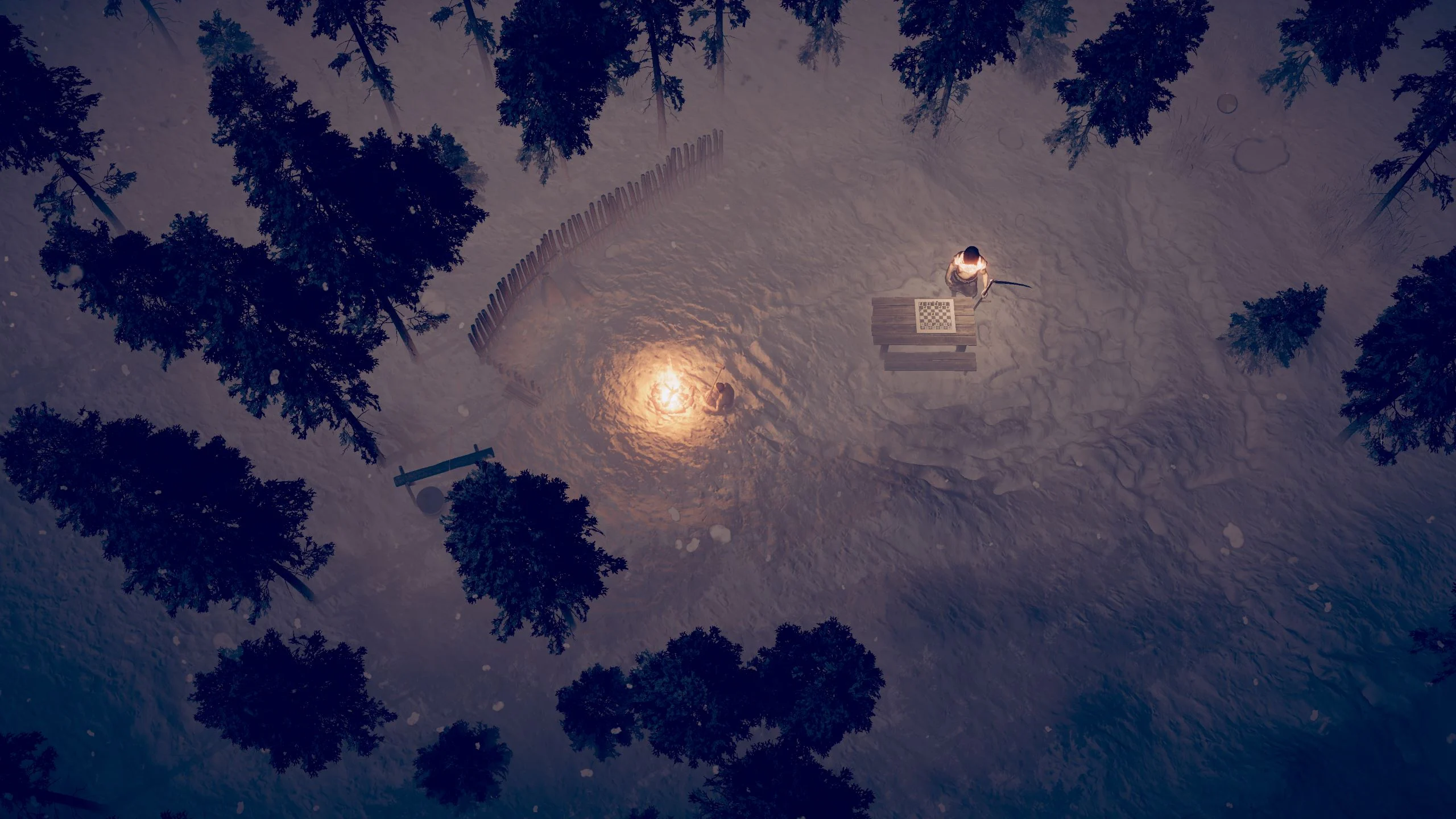
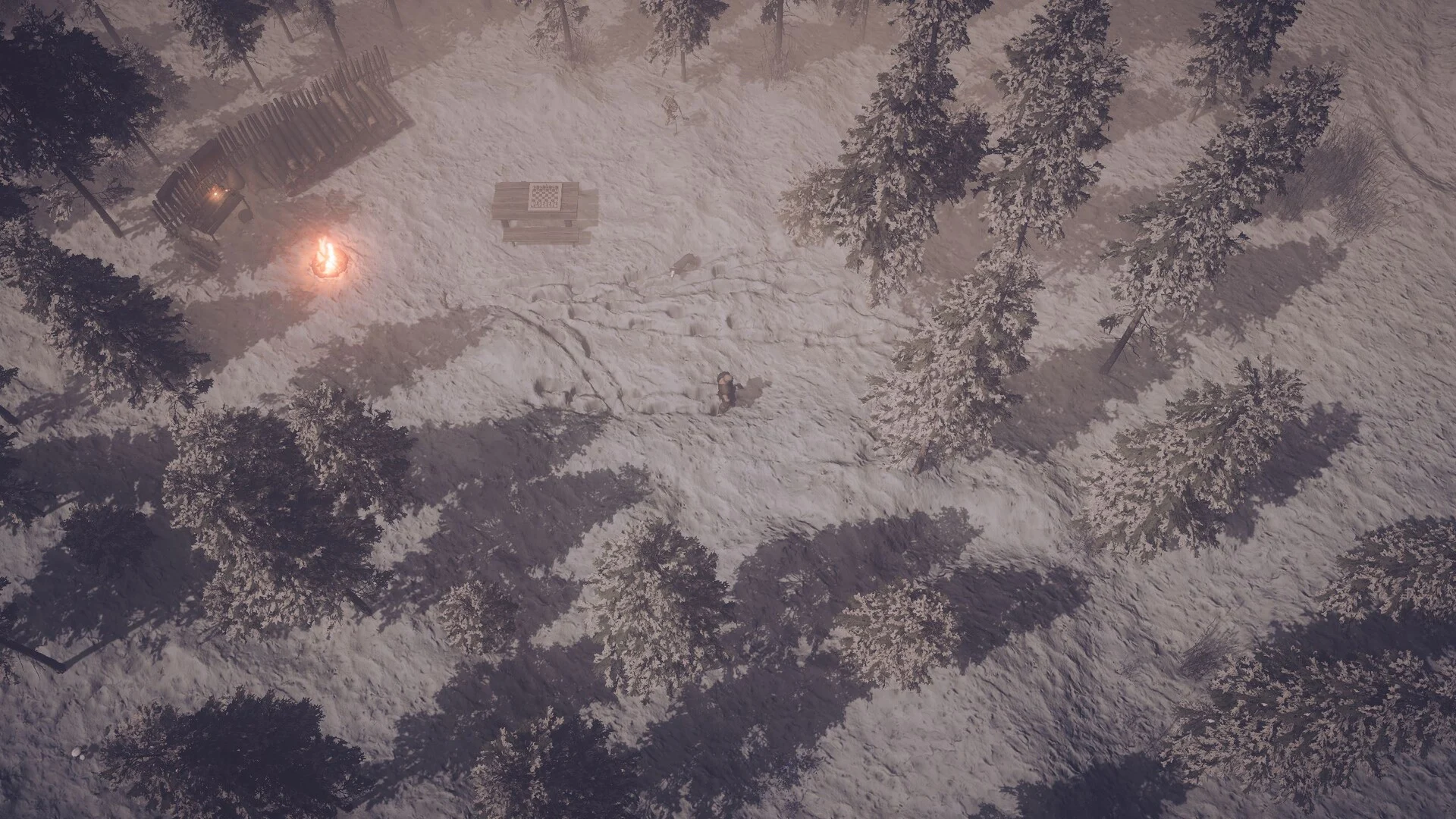
According to the Steam page, the player is already dead. To return, they must survive forty nights in the woods, making hard choices by day and playing chess against Death each night. Daytime is survival: cutting trees, gathering food, feeding the fire, and building and protecting a camp while the cold closes in and resources thin out. The store page calls it “not endless survival” but “a countdown.”
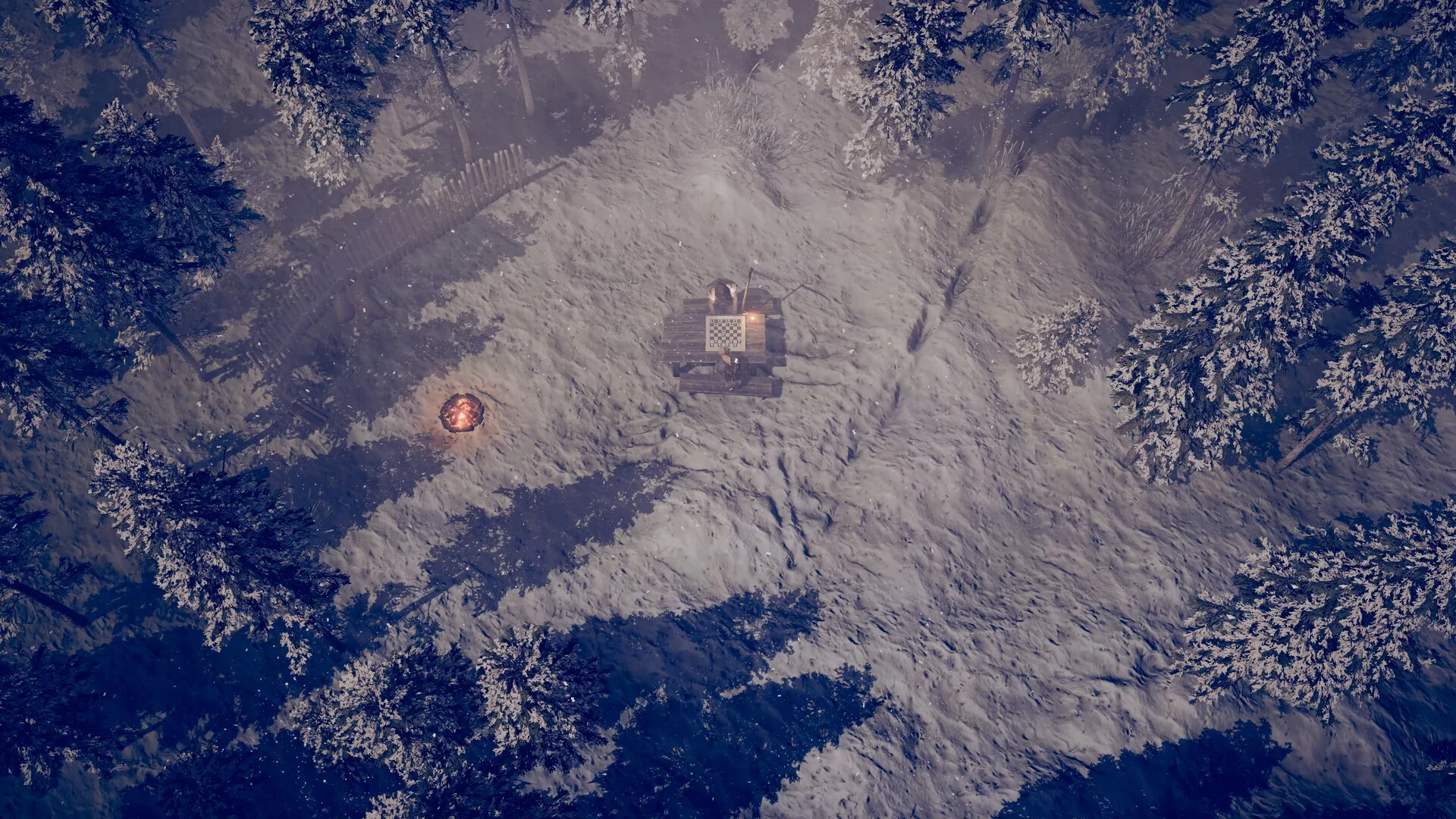
The world also responds to the player. Official materials describe a thief in the dark, a wandering merchant, a stranger offering to buy one of your pieces, and a silent figure standing too close to the fire. Pawns lost on the board can be found again in the snow, and pieces can be traded for warmth or supplies. Steam lists the game with adjustable difficulty, full controller support and a mouse-only option, and with support for English plus a long list of translated languages, Serbian among them.
The simplest comparison is a cold-weather survival game framed inside Bergman’s The Seventh Seal. That hybrid identity is the game’s central hook.
The Interview
Iron Bridge Games: Where did the idea of a chess match against Death come from, and how much did The Seventh Seal or Slavic folklore shape it?
Ivan Ristić: When I was younger, I was very passionate about chess. I played in local tournaments, studied chess theory, and spent quite a lot of time exploring the game. I’ve also always been interested in philosophy, from ancient Greek thinkers to relatively modern ones. That influence can already be seen throughout the story of Svarog’s Dream.
The idea behind The Last Opening was to combine these personal interests and see what would come out of it. A chess match against Death seemed like the natural theme to bring everything together. Bergman’s The Seventh Seal was certainly an influence. I’ve watched the film multiple times, and beyond its central theme, I tried to capture some of its atmosphere in the game. But the main idea was to create this small, isolated world where the player could sit down and discuss life, death, and everything in between with Death himself. Chess and survival are there to make that experience more engaging.
As for Slavic folklore, there is practically none of it in The Last Opening. It’s an entirely different setting from Svarog’s Dream.
Iron Bridge Games: How do the survival layer and the chess game feed into each other, and how do you keep a 40-move match readable for players who are not strong at chess?
Ivan Ristić: There are various ways to acquire new pieces on the chessboard through exploration and events in the world. For example, when you die during the survival part of the game, Death will resurrect you, but he’ll demand one of your chess pieces in return. So your actions in the world can drastically change the balance of the match.
It also works the other way around. The state of the chessboard influences which events occur in the world. You might lose a pawn during a chess match, only to encounter that same pawn wandering through the snow the following morning, ready to talk to you or offer you a quest.
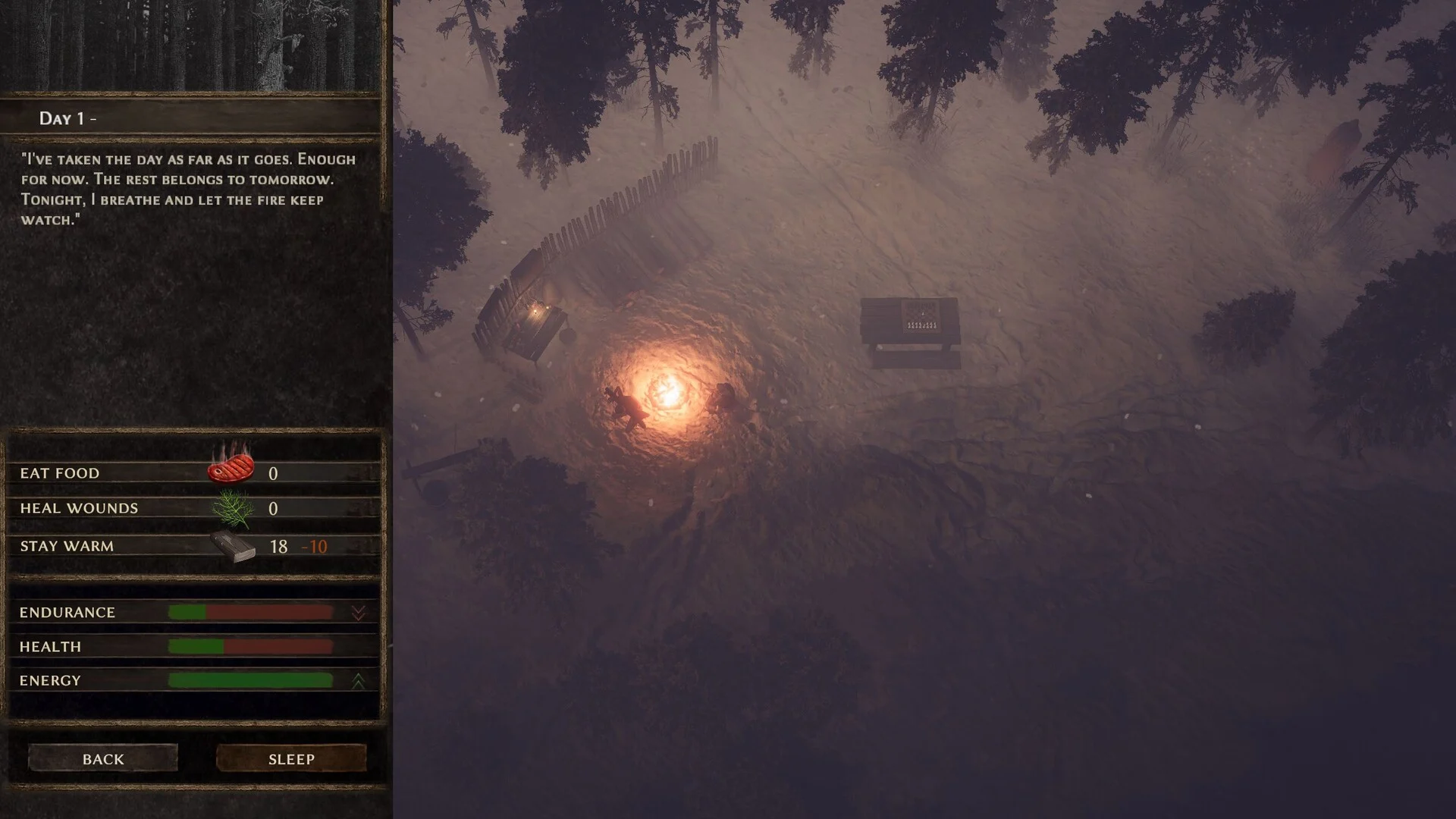
As for players who aren’t particularly good at chess, we have separate difficulty settings for chess and survival. Beyond that, the player can create advantages on the board through actions in the world, so chess knowledge isn’t the only way to succeed. Finally, while checkmating the Grim Reaper is one way to win, simply surviving all 40 days without losing the chess match is another.
Iron Bridge Games: How does Death play? Is it a chess engine, a scripted opponent, or something in between?
Ivan Ristić: Under the hood, Death uses a powerful open-source chess engine, which we’ve deliberately weakened to make the game manageable for ordinary players. His strength and aggression change throughout the game, not only based on the selected difficulty, but also depending on the passage of time and the player’s decisions.
Each day, besides making a chess move, the player can have a short conversation with the Grim Reaper. These conversations aren’t entirely without consequences. Insulting Death, for example, might make him play more aggressively for the next few moves, while a more respectful approach might have the opposite effect.
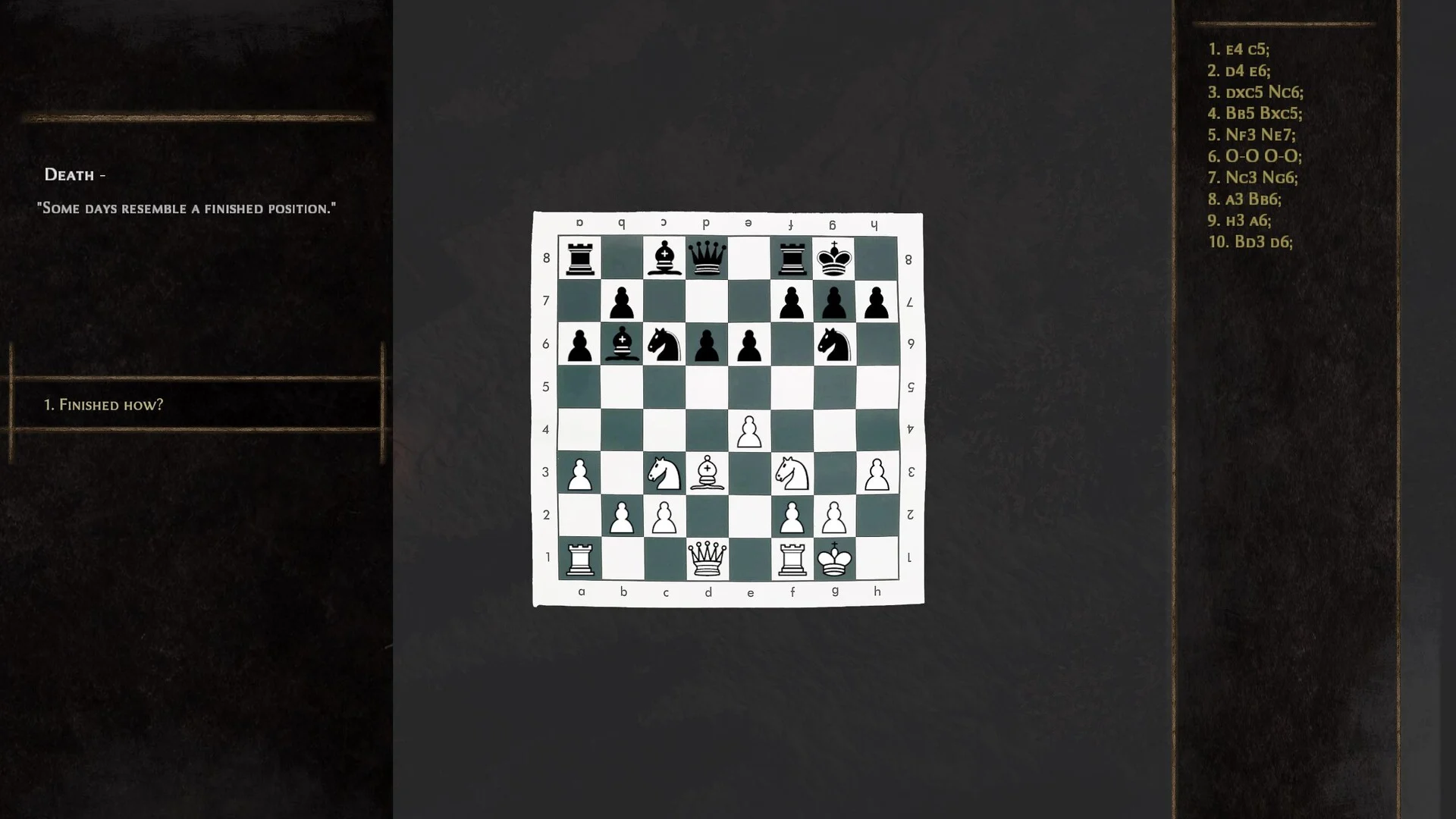
So although there’s a real chess engine behind him, we wanted Death to feel like a character rather than just a computer calculating moves.
Iron Bridge Games: What did Svarog’s Dream and its expansion teach you that you carried into this project?
Ivan Ristić: I actually prefer not to connect these two projects too much. This time, I really wanted to try something different and take a break from the action RPG genre. The Last Opening is also a much smaller project, both in scope and in the amount of time we’ve spent developing it.
I like to think of it the way musicians think of an EP released between two major albums. It’s a collection of ideas that came to us while working on our first big game. Ideas that wouldn’t really fit into Svarog’s Dream, but that we still believed were worth exploring and sharing with the world. Our next big album, so to speak, will be Svarog’s Dream 2, which is a much more ambitious project.
Iron Bridge Games: What has the Next Fest demo told you, and what will change before December 4?
Ivan Ristić: Well, to be honest, the biggest lesson from Next Fest was that this game is probably too slow and too niche for the majority of players. And I’m fine with that.
I don’t expect The Last Opening to become a major commercial success. It combines several unusual ideas while also going at a slow pace, and I understand that this kind of experience won’t appeal to everyone. I think games, like any other form of art, don’t always have to be created with commercial success as their primary goal. Sometimes you simply have an idea you believe in, and you want to bring it into the world. Even if only a small group of people connects with it, that can be enough.
Iron Bridge Games: What is it like making games as a small husband-and-wife team in Serbia, and why was it important to ship a Serbian translation?
Ivan Ristić: As for the Serbian translation, we translated The Last Opening into 15 languages, so including our native language among them felt like a natural choice.
As for making games together, it’s fulfilling. You get to spend your time creating something you love, something you believe in, and hopefully something you’re good at. Of course, being a small team also means wearing many different hats, but that’s part of the experience.
We also worked with several contractors and part-time collaborators, and one of the things I particularly enjoy is working with artists from different backgrounds. For example, we hired an artist who specializes in painting metal album covers to create illustrations for the game. We also worked with a professional voice actor to bring one of the characters to life. I love bringing people with different artistic backgrounds together and seeing what comes out of it.
The Last Opening was a relatively small project that took us about a year to complete, but it was an interesting and rewarding experience nonetheless.
Why This Matters in 2026
The most notable answer in this interview is the one about Next Fest. Developers rarely say, weeks before launch, that their game is probably too slow and too niche for most players, and that they are fine with it. Ristić frames The Last Opening as an EP rather than an album: a roughly year-long project made from ideas that did not fit Svarog’s Dream, released ahead of a larger sequel that the studio plans to support with a proper marketing campaign.
For players, the practical details are clear. The demo covers the first five days. Chess and survival have separate difficulty settings, and there are two ways to win: checkmate Death, or survive all forty days without losing the match. Strong chess knowledge is not the only path, because advantages on the board can be built through actions in the world.
For developers, the design of the opponent is the more interesting case study. Instead of scripting Death, VI Game Forge put a deliberately weakened open-source engine behind him and made his strength and aggression respond to time, difficulty and the player’s conduct in conversation. Insult him and he may play more aggressively for a few moves. That is a small, legible way to turn a solved-feeling system like a chess engine into a character, and it is the kind of systemic idea a small team can execute without scale.
On a broader level, The Last Opening is another data point for the Serbian indie scene, and for a model of small studios that alternate between large projects and compact, personal ones. Whether that EP finds its small audience will be clearer after December 4.
Screenshots From the Developer