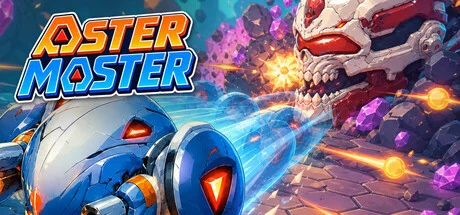
AsterMaster: The Solo-Built Rhythm Roguelite Where Every Boss Is a Cloud of Shards
What if a boss's health bar were written on its hull? AsterMaster's solo developer explains beat-driven hex combat, Gaussian-splat destruction and building it all in Godot.
Plenty of roguelites promise that every run will feel different. AsterMaster makes a narrower and more interesting promise: every hit should leave a mark you can actually see.
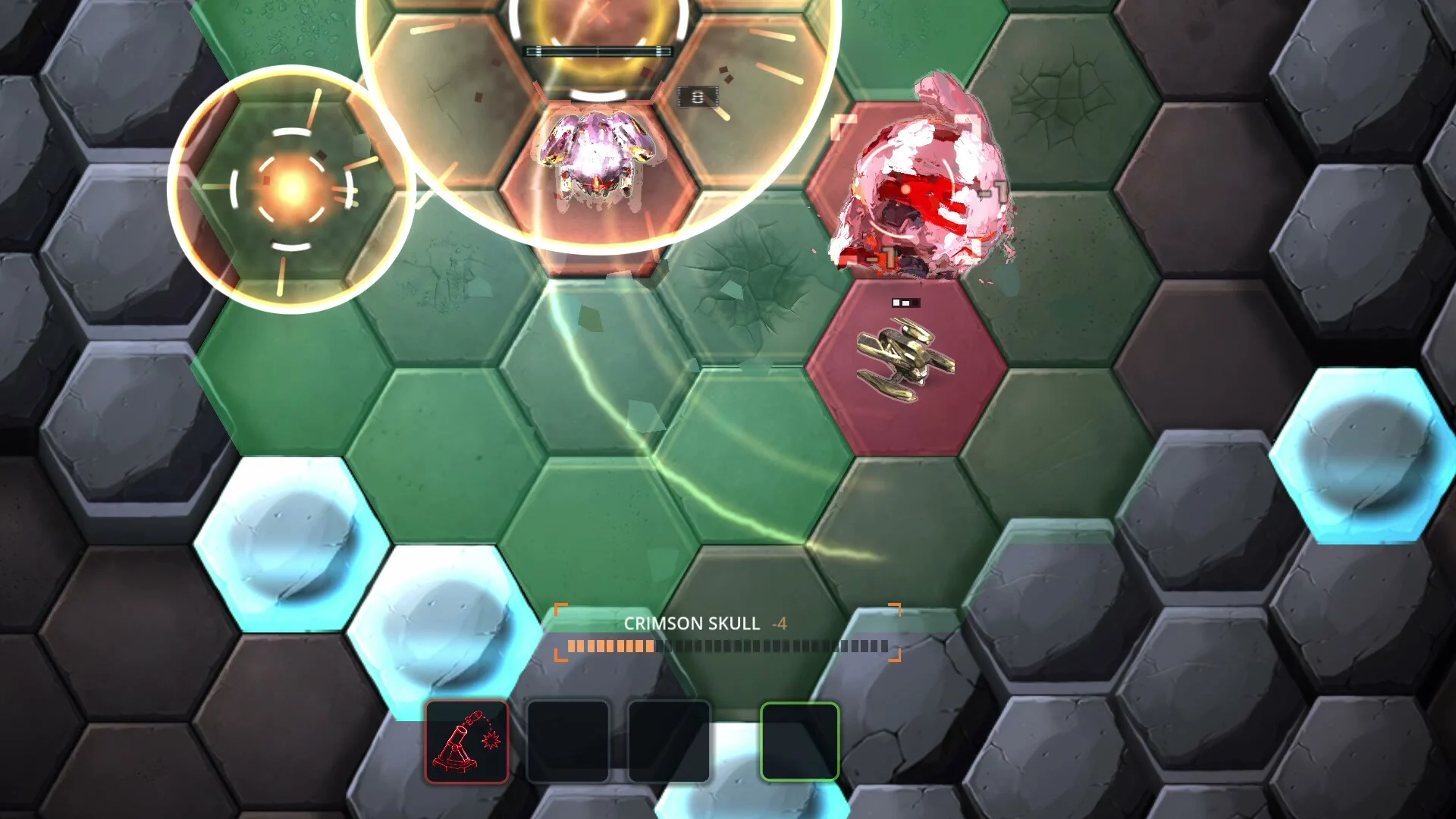
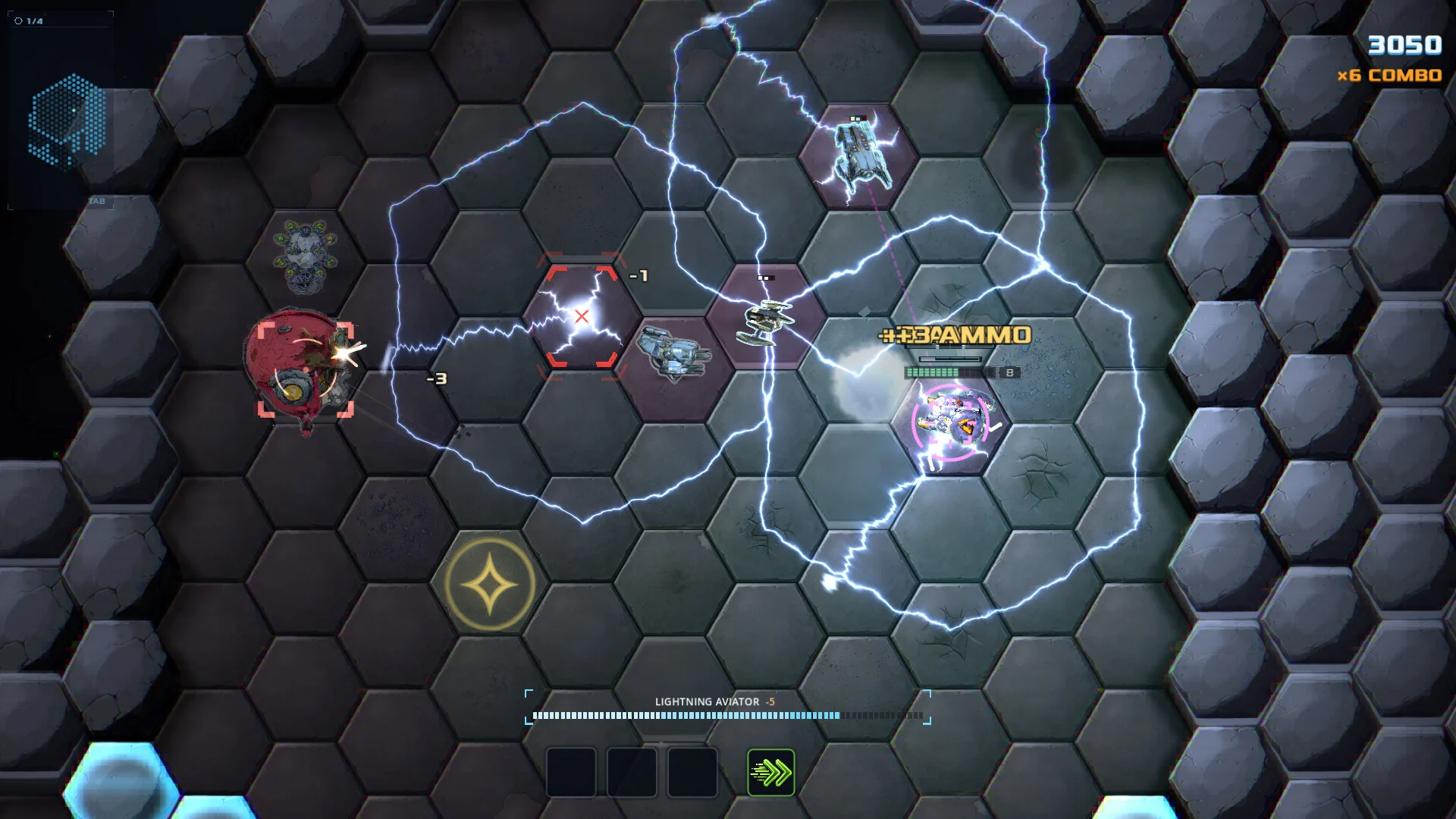
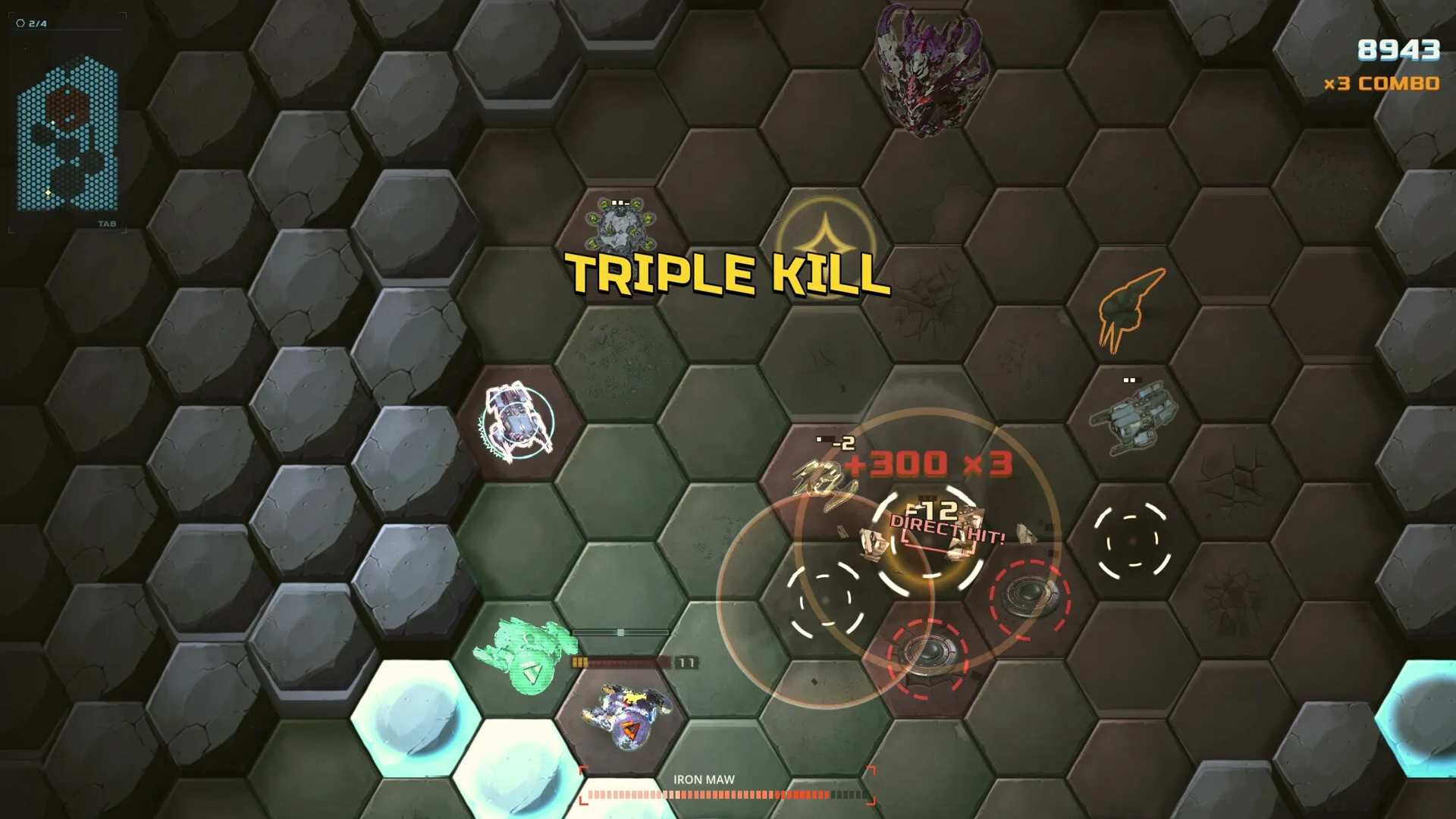
That is not a figure of speech. The bosses and elites in this beat-driven hex shooter are not conventional 3D models with health bars attached. They are clouds of thousands of small glowing shards, and damage carves craters into them, strips their plating and tears whole parts away. For a small indie shooter built by one person, that is an unusually ambitious technical bet, and it is the reason the developer behind AsterMaster is worth hearing from.
The game’s approach has already drawn attention outside the usual indie press. According to the official press kit, the graphics site Radiance Fields covered the destructible boss hulls in October 2026 and published a guest article on the developer’s splat-training workflow in November. We asked the solo developer, who goes by zakons, how the rhythm, the hex grid and the shards fit together.
Developer Spotlight
- Developer: zakons, solo (Zebka LTD on Steam; Zebka Games on the official site)
- Location: Not disclosed
- Engine: Godot
- Release: Steam currently lists January 2027; the official press kit gives 12 January 2027. A free demo has been on Steam since October 6, 2026.
- Price: Not listed on Steam yet
- Platforms: Windows (Steam), described by the developer as Steam Deck friendly, with full controller support. English and Russian.
What Is AsterMaster?
According to the Steam page, AsterMaster is a beat-driven roguelite shooter on a hex grid, set inside a dead mining asteroid. Everything on the grid moves to one metronome: enemies step and strike on the beat, the player steps with them, and a shot that lands on the beat hits harder. Off-beat volleys ricochet off armour. Every attack is telegraphed on the grid before it lands.
Each run is an expedition across a procedural mine graph of surface zones, boss-gated descents and orbital fragments where smugglers pay extra for ore. Drilling makes noise, and the deeper the player strips the asteroid, the harder the swarm pushes back. The build layer is equally specific: the Steam page lists 15 weapon mods across 3 slots, with modifiers stacking up to three times, four barrel types (sniper, railgun, mortar and cutter), eight powerups and a meta-tree between runs.
The simplest comparison is a top-down roguelite shooter framed inside a rhythm game’s clock. That hybrid identity is the game’s central hook, but the destructible hulls are what make it a useful case study for other small developers.
The Interview
Iron Bridge Games: How did the idea of a rhythm shooter on hexes come about?
zakons: I wanted fights you can read at a glance. On a hex grid every cell has six clear neighbours, so where you stand becomes a decision, and the beat gives the whole arena one clock: enemies step and strike on the beat and light up their target cell a beat ahead, so there’s always a moment to step away. You still move and shoot in real time. The beat changes how hard you hit: a shot on the beat bites, an off-beat volley ricochets off armour.
Iron Bridge Games: Why Godot, and how does it hold up?
zakons: It’s light, open and quick to iterate in. I could try an idea in an evening without fighting the engine. The whole look of the game is custom: over a hundred handwritten shaders, no bought effects. The splat hulls are drawn as a single MultiMesh in Godot’s Compatibility renderer, and a boss with effects and a crowd around it stays at about 5 ms per frame on an RTX 3060. The main lesson: keep the heavy work on the GPU and let the CPU only set a few parameters.
Iron Bridge Games: How did you come to use Gaussian splats for destruction?
zakons: I can’t draw, so the boss and drone models started as AI-generated meshes, 25–55 MB each, with messy topology. And a mesh dies boringly: play an animation, dissolve, gone. I wanted damage to be readable on the hull itself. A dented side is a story; an HP bar is a report.
Gaussian splatting describes an object as a cloud of small coloured ellipsoids, and a cloud can be dented, holed and torn apart. So I render each model in Blender from fixed angles, train about 6,000 splats on those renders (around 20 seconds per model on an RTX 3060) and ship half a megabyte instead of fifty. All the destruction (craters, hot debris, chunks breaking off, holes healing after a repair) runs in one vertex shader.
Iron Bridge Games: How do you balance the risk: bank the ore or go deeper?
zakons: Ore on board only becomes progress when you deliver it to a receiver station; die, and you drop the cargo. Deeper veins pay more, but every one you crack makes noise, and past certain thresholds the swarm wakes up. New enemies get tougher and faster. Overloading the hold adds noise too. Smugglers on orbital fragments pay 1.5× for ore, but dealing with them puts a police drone on your tail. So greed balances itself: you can always push for one more descent, and the game makes you feel it.
Iron Bridge Games: What’s it like to make a game solo?
zakons: Freeing and humbling at once. Nobody to argue with about direction, and nobody to catch your blind spots, so playtesters’ feedback matters more than anything. A lot of the code was written together with an AI coding agent; the decisions, the taste and the playtesting are mine. Without that, one person couldn’t run this many experiments in a single summer.
Iron Bridge Games: What will the full version add beyond the demo?
zakons: The demo loops the first part of the mine and its first boss, Crimson Skull, who gets tougher with every horizon. The full game opens the whole procedural mine: deeper zones, secret halls, orbital fragments with smugglers, five bosses with destructible hulls, Lightning Aviator among them, and an elite warden at the deepest gates, then a final gauntlet of holding halls. On top of that: the full meta-tree (a fourth mod slot, a bigger cargo hold), a seeded Daily Challenge, three difficulty levels, 60 achievements and a 20-log archive.
What Comes Next
When we spoke in late October, the developer was targeting November 17, 2026 at $4.99. That date has since moved. The Steam store page currently lists January 2027 and shows no price, while the official site and press kit give 12 January 2027. The free demo, which covers the first part of the mine and the Crimson Skull fight, remains available on Steam.
The store page has also continued to evolve since our exchange. It now describes the hulls of bosses, elites and the player’s own ship as roughly five thousand shards and a hundred chunks each, says the destruction core is native C++, and lists seven champion enemies with destructible hulls (Pack Alpha, Battery, Bastion, The Eye, Shepherd, Hive Mother and Sower), three of which roll into each run from the seed. It also lists 62 achievements against the 60 mentioned in the interview. Those differences appear to reflect ongoing development rather than contradictions, but the store page is the more current reference.
On transparency, the developer’s Steam disclosure states that some pre-made content was created with the help of generative AI and curated by the developer: promotional and splash artwork and some item icons, several source 3D meshes, background music tracks and portions of in-game flavour text. The game does not generate any content at runtime. In the interview, zakons also said a lot of the code was written together with an AI coding agent.
For players, the practical question is simple: whether readable, beat-locked combat and visible destruction add up to a run structure with enough depth. For developers, the more interesting point is the pipeline itself. Turning heavy, messy source meshes into half-megabyte splat clouds that can be damaged in a single vertex shader is the kind of structural solution that could matter well beyond one game. That distinction matters. AsterMaster is not using splats as decoration; it is using them as the health bar.